Ask how a memory supplement works and you usually get a metaphor about feeding or unlocking the brain. What follows is the actual mechanism behind each line on the MemoHoney panel, in the order it happens, with the dose attached to every step.
The short answer
MemoHoney supplies arginine and citrulline, which feed nitric oxide production and widen blood vessels; niacin, which supports NAD-dependent energy metabolism; and beta-alanine, a carnosine precursor. It is a circulation and energy-metabolism formula. The memory claim rests on the indirect argument that better cerebral perfusion helps cognition — at intakes far below the ones that have been shown to change perfusion.
First, how memory actually works
Memory is not one process. Encoding happens when you pay genuine attention; consolidation happens largely during sleep, particularly slow-wave sleep; retrieval depends on cues and on the health of the networks holding the trace. Anything that degrades attention, sleep or cerebrovascular health degrades recall, which is why the strongest interventions in this field are unglamorous: treat hypertension, treat hearing loss, exercise, sleep properly, stay socially and cognitively engaged.
That is the frame a supplement has to fit into. It does not replace any of it, and the honest question is only whether it adds anything measurable on top.
The six steps inside MemoHoney
1. The capsule delivers roughly 640 mg of amino acids
Two arginine forms, two citrulline forms and beta-alanine. Once salt forms are converted, that is about 315 mg of free arginine, 140 mg of free citrulline and 40 mg of beta-alanine — less than the panel's face value suggests.
2. Citrulline survives the liver better than arginine does
Oral arginine is largely broken down by arginase before it reaches circulation. Citrulline slips past that first pass and converts to arginine in the kidneys, which is why well-designed formulas lean on citrulline. Here, citrulline is the smaller of the two.
3. Arginine is the substrate for nitric oxide
Nitric oxide relaxes the smooth muscle lining blood vessels, widening them and improving flow. This is the mechanism behind arginine's use in cardiovascular and erectile-function research — at gram-level doses.
4. Better flow is an indirect route to feeling sharper
The brain consumes about a fifth of the body's oxygen, so cerebral perfusion genuinely matters for cognition. But no trial has shown a few hundred milligrams of arginine changing cerebral blood flow, let alone recall.
5. Niacin feeds NAD-dependent energy metabolism
The one line doing a straightforward nutritional job. 7.5 mg NE covers 47% of the Daily Value and supports the enzymes that release energy from food.
6. Beta-alanine buffers acidity inside muscle
Its research base is muscular endurance in one-to-four-minute efforts, following weeks of gram-level loading. At 40 mg it contributes neither the carnosine loading nor the tingle, and neither one relates to memory.
See the current MemoHoney sale pricing
Bundle pricing on the MemoHoney official website falls from $79 to $49 a bottle, and three- and six-bottle orders ship free within the US with five digital guides included.
View MemoHoney PricingOfficial website checkout · 60-day guarantee · confirm the terms before paying
Why the timeline is 8 to 12 weeks
Self-reported cognition is noisy. How sharp you feel on a given afternoon depends on last night's sleep, today's stress, your caffeine timing and whether you are coming down with something. A single good week means nothing. Trials in this field typically run 8 to 16 weeks precisely because that is how long it takes for a real signal to separate from that noise.
The practical consequence for MemoHoney buyers is uncomfortable. The guarantee runs 60 days. A twelve-week trial is 84 days. Those windows do not overlap, which is why every page on this site recommends diarising your refund decision for day 50 rather than waiting until the bottles run out.
What would make it work better
- Fix sleep first. Consolidation happens during it, and nothing in a capsule substitutes.
- Get blood pressure and hearing checked. Both are strongly linked to cognitive trajectory and both are treatable.
- Move most days. Aerobic exercise is the best-evidenced intervention for cerebral blood flow — the exact endpoint this formula aims at, at a dose that actually works.
- Take it consistently. Attach it to a meal you never skip.
- Write the baseline down. Three specific, countable observations before capsule one.
Where the mechanism runs out
Every mechanism above is real. Three things are missing. There is no finished-product human trial of this specific seven-ingredient capsule. There is no trial showing oral arginine or citrulline at these amounts changing cerebral blood flow. And there is no trial at all showing either compound improving memory or recall in healthy adults — which is a different and more important gap than the dosing one.
Ingredient research is evidence about ingredients at the doses studied, in the populations studied, for the endpoints studied. For arginine and citrulline those endpoints are vascular function and exercise performance. Borrowing that evidence to support a memory claim is the move this whole category is built on, and it is worth naming.
See the numbers behind all of this on the MemoHoney ingredients page, or read what MemoHoney is for the wider picture.
Frequently asked questions
How long does MemoHoney take to work?
Plan on 8 to 12 weeks of consistent daily use judged against a written baseline. Note that the 60-day guarantee closes before a 12-week trial ends, so diarise your refund decision for day 50.
Does MemoHoney improve blood flow to the brain?
That is the mechanism it aims at, but no trial has shown these amounts changing cerebral blood flow. Vascular research on arginine uses 3 to 6 grams a day; this capsule provides roughly 315 mg of free arginine.
Why take MemoHoney before a meal?
Amino acids absorb better away from a large protein load, so a capsule taken 20 to 30 minutes before eating faces less competition for absorption.
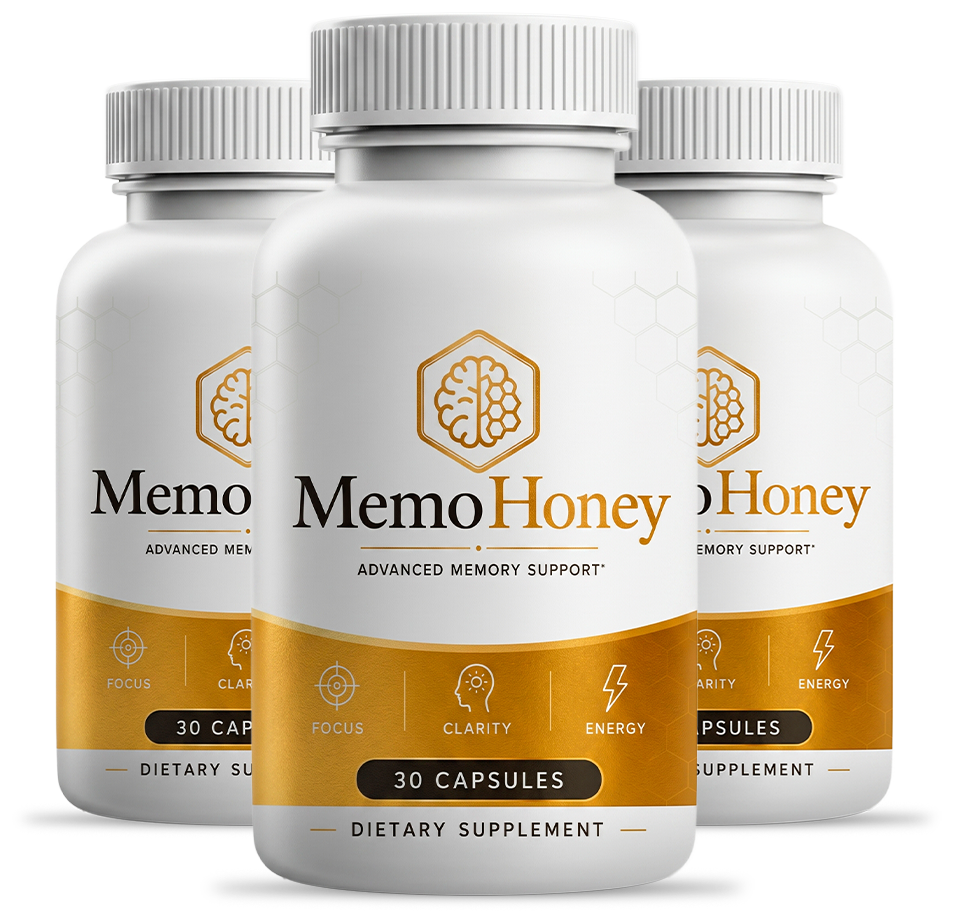
MemoHoney Official Website
per bottle on the 6-bottle bundle · free US shipping on 3 and 6
Check Current Price 60-day guarantee · official checkout only